
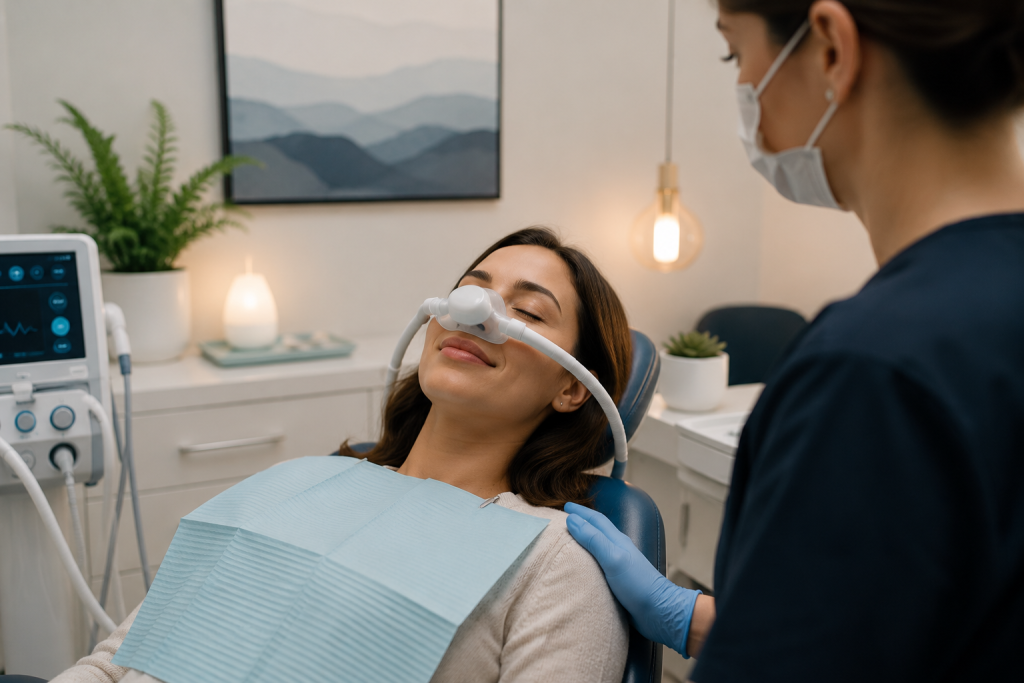
You have put off a filling for months. Every time you think about the chair, the drill, the smell, your stomach drops. You are not weak, and you are not alone. Fear of the dentist keeps a lot of people away from care they need.
What is sedation dentistry, in plain terms?
Sedation dentistry uses medication to help you stay calm and relaxed during dental treatment. It ranges from mild, where you stay fully awake and just feel less anxious, to deeper levels. The most common options in a general dental office are nitrous oxide, known as laughing gas, and oral sedation, a pill you take before your visit. Sedation eases fear and a strong gag reflex. It is not a painkiller, so your dentist still numbs the area.
We are Dr. Julita Patil, DDS, a general dentist in Concord who trained at UC San Francisco and has treated anxious patients here for more than 27 years. We offer sedation because fear should not cost you your oral health.
Key takeaways if the dentist makes you anxious
Read these five points first. They answer what most nervous patients ask us before booking.
- Nitrous oxide wears off within minutes, so you can usually drive yourself home after.
- Oral sedation keeps you awake but deeply relaxed, and you will need a ride home.
- Sedation is not a painkiller. Your dentist still numbs the tooth with local anesthetic.
- The American Dental Association calls nitrous oxide safe and effective when used correctly.
- Tell us your full medical history and medications at the consult, since both affect which option is safe for you.
Why do people choose sedation?
Most patients pick sedation for one of a few clear reasons. Dental fear is the big one, and it is common. The American Dental Association estimates that dental anxiety affects about 22 percent of adults, and severe phobia affects another 5 to 8 percent. Sedation helps you get through a visit you would otherwise cancel.
Fear is not the only reason. Patients also ask for sedation when they have a strong gag reflex, a low pain threshold, trouble sitting still, or a long appointment ahead. In each case, sedation makes the visit easier for you and lets us work more smoothly.
There is a quiet cost to avoiding the dentist. A small cavity that could have been a simple filling turns into a root canal or an extraction. Sedation is one way to break that cycle of putting things off.
The levels of sedation, explained
Sedation runs on a scale set by how awake you stay. The American Society of Anesthesiologists defines four levels: minimal, moderate, deep, and general anesthesia. A general dental office like ours works at the lighter end, with nitrous oxide and oral sedation. Deeper sedation needs special training, equipment, and licensing that not every office holds.
Here is what the lighter levels feel like in practice.
Minimal sedation, staying fully awake
Minimal sedation keeps you fully awake and able to answer the dentist, just noticeably calmer. Your breathing and heart rate stay normal. We reach this level with nitrous oxide or a low-dose pill. It suits mild nerves and routine work like a cleaning or a filling. Most patients are surprised how much it takes the edge off without leaving them groggy.
Moderate sedation, relaxed and drowsy
Moderate sedation leaves you awake but drowsy, and you may remember little of the visit. You can still respond to a touch or a question. We reach this level with a higher dose of an oral sedative. It suits stronger anxiety or a longer appointment. You will need a responsible adult to drive you home, because the medication lingers for hours.
The table below sums up how the two lighter options compare.
| Factor | Minimal Sedation | Moderate Oral Sedation |
|---|---|---|
| Awareness | Fully awake, calmer | Awake but drowsy, foggy memory |
| Method | Nitrous oxide or low-dose pill | Higher-dose oral sedative |
| Wears off | Within minutes of removing mask | Lingers several hours |
| Drive yourself home | Usually yes | No, arrange a ride |
| Best for | Mild nerves, routine visits | Stronger anxiety, longer visits |
Is sedation dentistry safe?
For most healthy patients, dental sedation is safe when a trained dentist gives it in a properly equipped office. Every medication carries some risk, so screening matters. The American Dental Association calls nitrous oxide and oxygen a safe, effective way to manage anxiety when used correctly, and it requires specific training for dentists who provide sedation.
Your health history changes the picture. The Mayo Clinic notes that deeper sedation carries more risk and needs careful screening first. Conditions like sleep apnea, heart disease, or certain medications may call for extra care or a nod from your physician. That is why we go through your full history before we pick an option.
Nitrous oxide has a long track record. It has been used in dentistry for well over a century, and the gas clears your system within minutes once the mask comes off.
Who is a good candidate for sedation?
You may be a good candidate if fear, a gag reflex, or a long procedure makes normal dental care hard. Sedation fits patients with mild to strong anxiety, those who struggle to sit still, and people facing several treatments in one visit. It is not right for everyone, though. Some health conditions and medications rule out certain options, which is why the consult comes first.
A few signs that sedation is worth asking about:
- You cancel or delay dental visits because of nerves.
- Past dental experiences left you fearful.
- A cleaning triggers a strong gag reflex.
- You need a lot of work done and want fewer, calmer visits.
Pregnancy is one case where we take extra care. We usually avoid nitrous oxide during pregnancy and talk through timing and safer options with you.
What to expect and how to prepare
Preparing for a sedation visit is simple, and we walk you through it. For nitrous oxide, there is little to do beyond showing up. For oral sedation, you take the pill before your appointment, so you arrange a ride both ways. Either way, you tell us your medications and health conditions ahead of time.
The visit itself is calm by design. With nitrous oxide, you breathe through a small nose mask, feel the relaxation within minutes, and the effect fades minutes after we remove it. With oral sedation, the pill takes about an hour to settle in, and the drowsy feeling can last several hours after you leave.
Talk to us honestly about what scares you. There is no judgment here. The more we know, the better we match the option to you.
Talking to us about sedation in Concord
The right answer for you depends on your health, your anxiety, and the work you need. A blog cannot tell you which option fits, but a conversation can. We look at your history, hear what worries you, and explain what each choice would feel like.
If fear has kept you away from the dentist, you do not have to push through it alone. Call our Concord office at (925) 689-2585 to talk with Dr. Julita Patil about sedation. We will help you find a way to get the care you have been putting off, at a pace that feels manageable.